Services
Tools
Products
>
Level
>
Float switches – Range of 13 models
Level
strumenti-livello
WIKA

Float switches – Range of 13 models

Versatile float switches from WIKA. 13 models from WIKA, also with ATEX, IECEx, FM approvals: filters, datasheet and quote request for each model.

DNV
CE
ATEX
FM
EAC
BV
UKCA
IECEx
Description
Technical Specifications
Applications
Download
Datasheets

Versatile float switches from WIKA

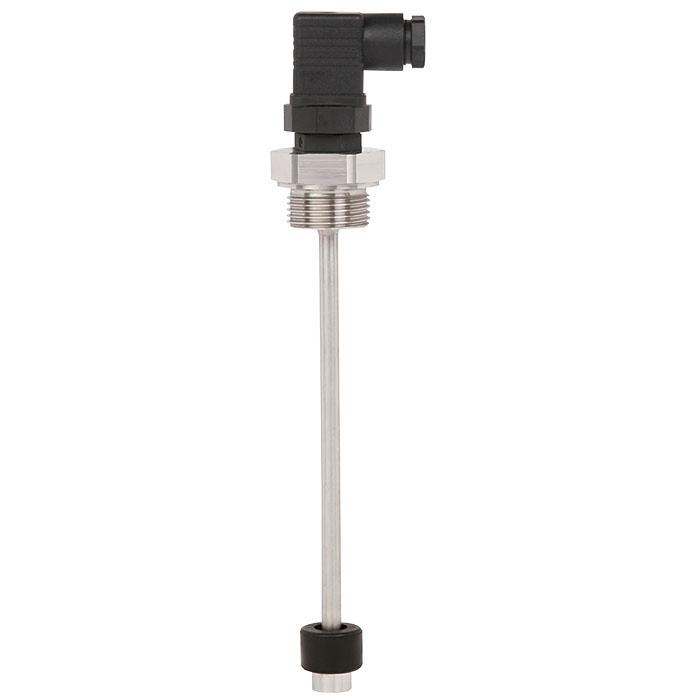
Float switches in (the process) industry are used for the point-based limit level detection of one or several levels. They work independently of foaming, conductivity, dielectric, pressure, vacuum, temperature, vapours, condensation, bubble formation, boiling effects and vibrations and are suitable for almost all liquid media. The switching operation is contact-free, wear-free and needs no auxiliary power. The simple and proven functional principle of float switches enables a very wide range of applications from general industrial applications to use in process plants or in the shipbuilding industry.

What float-based measuring systems for level monitoring are there?

Floats play an important role in float-based measuring systems for level monitoring, for example of liquids. These systems are often used in combination with pumps and comprise different types of instruments. They include float switches, level sensors, level switches and bypass level indicators.Float switches are special switches that are used for point-based limit level detection in various liquids. They use floats to precisely determine the level inside of a tank. In particular, they are used for controlling pumps and can be used to monitor one or several fill levels. Because they are simple, universally applicable and exceptionally reliable, float switches have a very wide range of applications. Depending on accuracy requirements, level sensors and level switches are available with reed contacts, reed chains or magnetostrictive measuring systems. Bypass level indicators, similar to level switches, are mounted on the side of the tank and are often combined with a magnetic indication for visual level indication.

What does a float switch consist of?

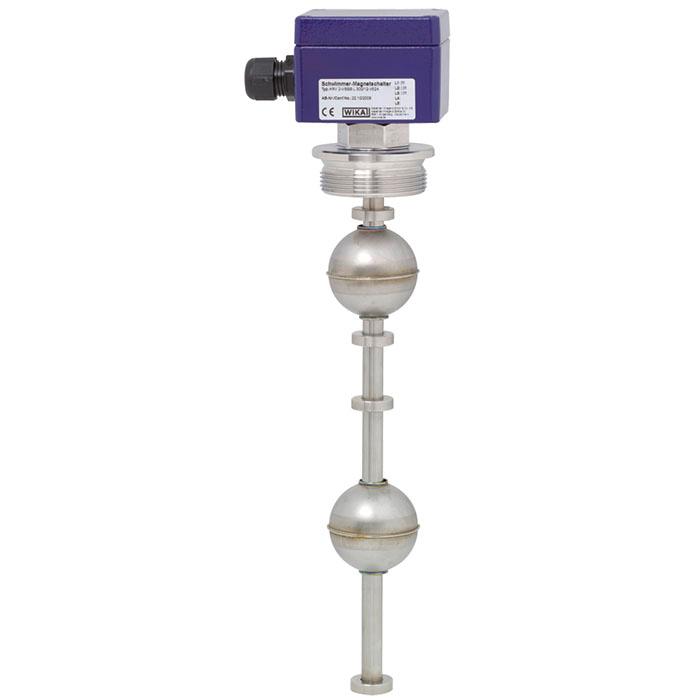
Level measurement technology is based on the buoyancy of a hollow body, the so-called float. Due to its low density and buoyancy, the float is raised when the level of the liquid rises and lowered when the level of the liquid falls. A float-based measurement technology uses the movement generated by the level change to measure the level. The switch point, which is often realised using a reed contact, plays a key role when it comes to determining the accurate level. Modern float switches have a very sophisticated design. The size of the float switch also plays an important role for the use in various application areas and has to be carefully selected. In its simplest form, a float switch is made up of the following components:

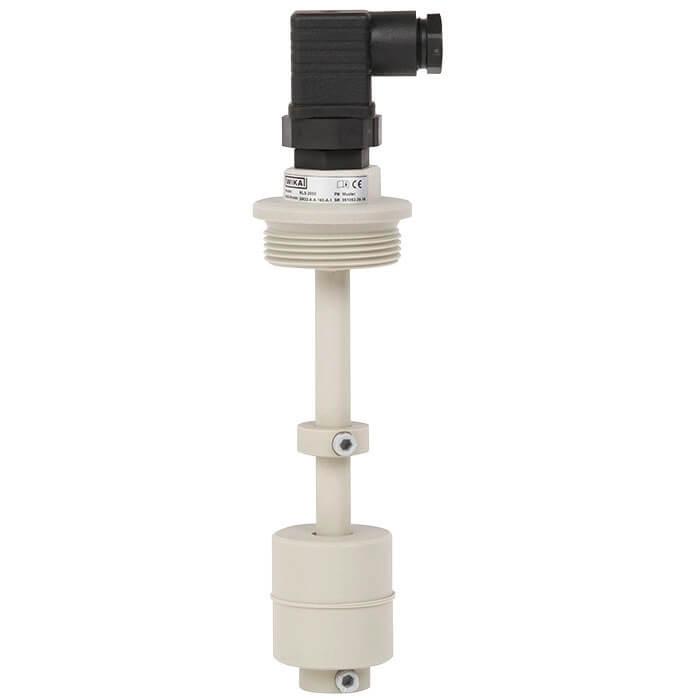
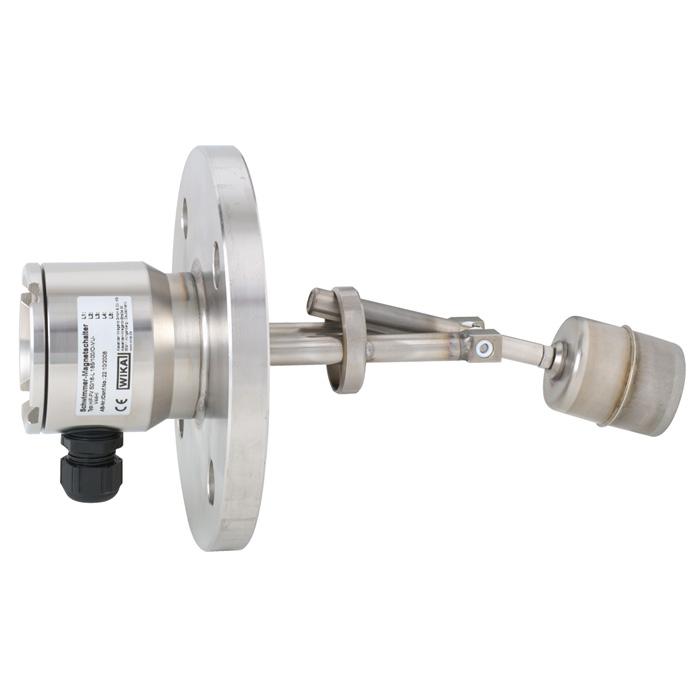
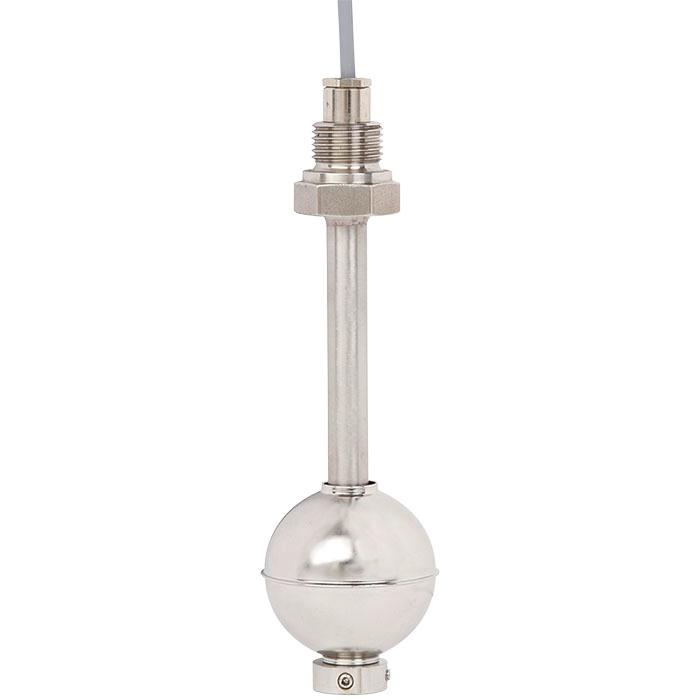
• A hollow float with an enclosed magnet

• A guide tube for guiding the float

• Adjusting collars to limit the movement of the float on the tube

• A reed contact located inside

How does a float switch work?

A reed contact, also known as a reed switch, which is, for example, used in pumps, involves contact leaves that are located inside the hermetically encapsulated glass body. These contact leaves move towards or away from each other due to a magnetic field. If a float switch is used with a reed switch with the switching function of normally open and a magnetic field is applied, the contact leaves move towards each other. Current can then flow through the contact of the leaves and a switching signal can be detected. If a float switch with the switching function of normally closed is being used, the contact leaves move away from each other and the circuit is interrupted as soon as a magnetic field is applied. Another option is the use of a change-over contact, where three contact leaves are used within the glass body. Three contact leaves allow one normally closed and one normally open switch to be used simultaneously in each operating state. To generate the desired switching signal, i.e. to close or open the contact leaves, a magnetic field must be applied. Adjusting collars are used to limit the movement of the float at the desired position and are fitted by the manufacturer. Thus, when the level rises to the defined level, the defined switching signal can follow.

How do I find a suitable float switch?

In order to select the suitable float switch or level switch for different liquids, especially if they are used in combination with pumps, certain requirements should be defined:

• Number of switch contacts / switching outputs

• Position and function of every switching output

• Guide tube length

• Electrical connection (e.g. PVC cable outlet)

• Process connection

• Material (stainless steel, plastic, …)

• Size to ensure that the float switch is suitable for the respective application

No items found.
# General Brand: WIKA Category: Float switches Available models: 13 # Explosion protection Ex approvals: ATEX, IECEx, FM, EAC Types of protection: Ex d (flameproof enclosure), Ex i (intrinsic safety), Ex t (protection by enclosure)
{"modelli":{"f":[["Installation",["Vertical","Horizontal","Lateral installation"]],["Measurand",["Level","Level + temperature"]],["Switch points",["1 switch point","2 switch points","3 switch points","4 switch points","> 4 switch points"]],["Material",["Stainless steel","Plastic"]],["Approvals",["ATEX","IECEx","FM","EAC"]]],"r":[["RLS-1000","Float switch – For industrial applications",[[0,2],[0],[0,1,2,3],[0],[]],0,"Data-sheets/Level/Float-switches/ds_lm5003_en_co.pdf",""],["FLS","Float switch – For the process industry, vertical installation",[[0,2],[0,1],[0,1,2,3,4],[0,1],[0,2,3]],1,"Data-sheets/Level/Float-switches/ds_lm3001_en_co.pdf","ATEX, FM, EAC"],["RLS-2000","Float switch – For industrial applications, plastic version",[[0,2],[0],[0,1,2,3],[1],[]],2,"Data-sheets/Level/Float-switches/ds_lm5004_en_co.pdf",""],["HLS-S, HLS-P","Float switch – For the process industry, horizontal installation",[[1,2],[0,1],[0],[0,1],[0,1,3]],3,"Data-sheets/Level/Float-switches/ds_lm3002_en_co.pdf","ATEX, IECEx, EAC"],["RLS-3000","Float switch – For industrial applications, with temperature output",[[0,2],[1],[0,1,2],[0],[]],4,"Data-sheets/Level/Float-switches/ds_lm5006_en_co.pdf",""],["ELS","Level switch – For the process industry, in laterally mounted external chamber",[[2],[0],[0],[0],[2]],5,"Data-sheets/Level/Float-switches/ds_lm3003_en_co.pdf","FM"],["RLS-4000","Float switch – For industrial applications, intrinsic safety Ex i",[[0,2],[0,1],[0,1,2,3],[0],[0,1]],6,"Data-sheets/Level/Float-switches/ds_lm5007_en_co.pdf","ATEX, IECEx"],["HLS-M","Float switch – For horizontal installation, miniature design",[[1,2],[0],[0],[0,1],[]],7,"Data-sheets/Level/Float-switches/ds_lm3006_en_co.pdf",""],["RLS-5000","Bilge float switch – For the shipbuilding industry",[[0],[0],[0],[0],[]],8,"Data-sheets/Level/Float-switches/ds_lm5008_en_co.pdf",""],["SLS","Suspended float switch",[[0],[0],[0],[1],[]],9,"Data-sheets/Level/Float-switches/ds_lm3201_en_co.pdf",""],["RLS-6000","Suspended float switch – For water and wastewater",[[0],[0],[0],[1],[]],10,"Data-sheets/Level/Float-switches/ds_lm5009_en_co.pdf",""],["RLS-7000","OEM float switch – Miniature design, vertical installation",[[0],[0],[0],[1],[]],11,"Data-sheets/Level/Float-switches/ds_lm5011_en_co.pdf",""],["RLS-8000","OEM float switch – Miniature design, horizontal installation",[[1,2],[0],[0],[1],[]],12,"Data-sheets/Level/Float-switches/ds_lm5012_en_co.pdf",""]],"s":{"u":"https://cdn.prod.website-files.com/6aa55eca30c5bd4a1e486a4c/6ade225586d35a5971c123cd_mfw-livellostati-a-galleggiante.jpg","c":12}}}

No items found.
No applications listed.